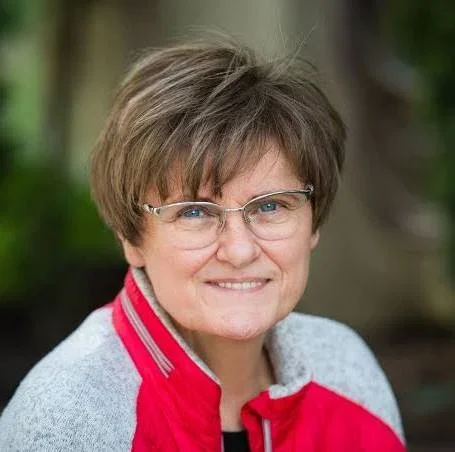
How one scientist's perseverance paved the way for life-saving mRNA vaccines
When people think about the COVID-19 pandemic, many remember lockdowns, masks, online school, or the excitement of finally receiving a vaccine. But behind one of the greatest medical breakthroughs of the 21st century is a woman whose name many people had never heard before: Dr. Katalin Karikó.
For decades, Dr. Karikó believed in an idea that most scientists dismissed. She faced rejection after rejection, struggled to secure research funding, and was even demoted from her university position. Yet she never stopped believing that messenger RNA—better known as mRNA—could one day transform medicine.
Her persistence not only led to the development of the first mRNA vaccines but also opened the door to a future where scientists may be able to treat diseases ranging from cancer to rare genetic disorders.
Her story reminds us that scientific discovery isn't always about immediate success—sometimes, it's about refusing to give up.
Growing Up with Big Dreams
Katalin Karikó was born in 1955 in Kisújszállás, Hungary, a small town where scientific research wasn't exactly a common career path. Her father worked as a butcher, and her family lived modestly. Despite limited resources, Karikó developed an early fascination with biology and the natural world.
She loved asking questions.
How do cells work?
Why do diseases happen?
How does the human body repair itself?
These questions inspired her to study biology at the University of Szeged, where she eventually earned her Ph.D. in biochemistry.
Even as a young scientist, she believed that understanding cells at the molecular level could unlock entirely new ways of treating disease.
During the 1980s, research opportunities in Hungary became increasingly limited. Determined to continue her scientific career, Karikó and her husband made a difficult decision: they would move to the United States.
The journey wasn't easy.
According to interviews, the family sold many of their belongings and even hid their savings inside a teddy bear so they could safely bring money with them. They arrived in America with little more than determination and hope for a better future.
Karikó began working at research institutions, eventually joining the University of Pennsylvania.
She was excited to pursue cutting-edge biomedical research.
But one particular idea captured her attention more than anything else.
Every cell in your body contains DNA, which acts like an instruction manual.
However, DNA doesn't directly build proteins.
Instead, cells create a temporary copy of those instructions called messenger RNA (mRNA).
Think of DNA as the cookbook stored safely on a shelf.
Messenger RNA is like a recipe card copied from that cookbook and brought into the kitchen so a chef can prepare the meal.
Scientists wondered:
What if we could design our own mRNA?
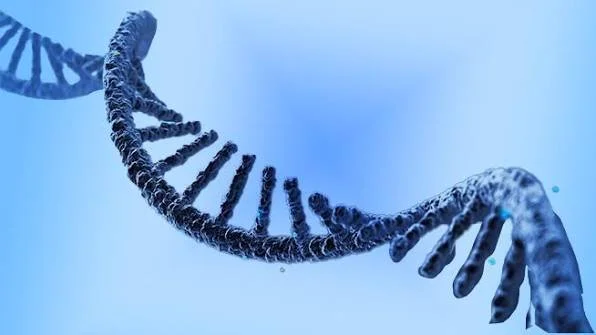
Could we instruct cells to produce helpful proteins that fight disease?
Many researchers believed the idea was impossible.
Karikó thought otherwise.
Throughout the 1990s, Karikó focused almost entirely on mRNA research.
Unfortunately, nearly everyone else thought it was a waste of time.
Research grants were repeatedly denied.
Funding agencies didn't believe the technology would ever work.
Her university eventually removed her from the tenure track and reduced her position.
For many scientists, this might have marked the end of their careers.
But Karikó kept going.
She often said that every failed experiment simply taught her what to try next.
Her resilience became one of her greatest strengths.
Everything changed when Karikó met immunologist Dr. Drew Weissman at the University of Pennsylvania.
The two scientists combined their expertise.
Karikó understood RNA.
Weissman understood how the immune system reacted to foreign molecules.
Together, they discovered something remarkable.
The body was attacking laboratory-made mRNA because it recognized it as dangerous.
But by making tiny chemical modifications to the mRNA molecule, they dramatically reduced the unwanted immune response while allowing cells to use the instructions effectively.
This breakthrough, published in 2005, became the foundation for modern mRNA vaccines.
At the time, however, relatively few people paid attention.
Then came 2020.
When scientists identified the virus responsible for COVID-19, researchers already knew its genetic sequence.
Instead of growing weakened viruses inside laboratories—a process that can take months—companies using mRNA technology designed vaccine candidates within days.
The vaccines taught human cells to briefly produce a harmless piece of the virus called the spike protein.
The immune system recognized this protein, practiced defending against it, and developed protection without exposure to the virus itself.
Millions of lives were saved.
What had once seemed like an impossible dream suddenly became one of the fastest vaccine developments in history.
Karikó's work didn't stop with one vaccine.
Scientists are now studying mRNA technology to develop treatments for:
Certain cancers
Influenza
HIV
Rare genetic disorders
Autoimmune diseases
Personalized cancer vaccines
Researchers are even exploring whether mRNA can help regenerate damaged tissues or deliver therapeutic proteins directly into the body.
What once sounded like science fiction is quickly becoming reality.
For many years, Karikó worked quietly behind the scenes.
Today, she has received some of the world's highest scientific honors.
In 2023, Katalin Karikó and Drew Weissman were awarded the Nobel Prize in Physiology or Medicine for their discoveries concerning nucleoside base modifications that enabled the development of effective mRNA vaccines.
It was a moment that recognized decades of perseverance: not just one successful experiment.
Katalin Karikó's journey teaches us that success doesn't always happen overnight.
Science is built on curiosity, persistence, and the courage to pursue ideas that others may not immediately understand.
Her story also reminds us that setbacks don't define our potential. Funding may disappear. Experiments may fail. People may doubt your ideas. Yet every challenge can become an opportunity to learn, improve, and move one step closer to a breakthrough.
Today's students are growing up in a world where mRNA technology is already changing medicine. The next generation of scientists may build on Karikó's work to develop treatments we can't even imagine today.
Who knows? One of those future scientists could be reading this article right now.
Think About It
If you had unlimited funding to research one disease or medical challenge, what would you choose, and why? Every breakthrough begins with someone asking a simple question and daring to search for the answer.